%20(9)?qlt=85&ts=1687419463373&dpr=off)
Sustainability in Everything We Do
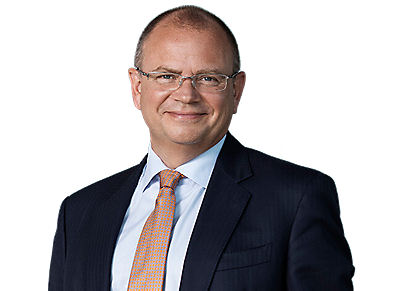
"At Vestas, sustainability is the business we are in, it's one of the key purposes that our more than 37.000 employees come to work every day - to make the world a more sustainable place. Now - with the Vestas Sustainability Strategy, we are embedding sustainability into everything we do as we become the global leader in sustainable energy solutions"
Henrik Andersen, Group President & CEO at Vestas
How do we define sustainability?
The concept of sustainability means being able to meet the needs of the present generation without compromising the ability of future generations to meet theirs.
At Vestas, sustainability is grounded in our four corporate values:
- Simplicity
- Collaboration
- Accountability
- Passion
Sustainability at Vestas means reducing or eliminating negative environmental and social impacts, as well as maximising the value that our business and products provide for our customers, employees, shareholders, suppliers, local communities, and the planet at large. It also means upholding sustainability in governance structures. We believe these efforts will help to elevate the standards of our industry as a whole.
%20(11)?qlt=85&ts=1687419427005&$Default-Image$&dpr=off)
Four key goals
In February 2020, we launched our first global Sustainability Strategy, entitled "Sustainability in Everything We Do". Committing to ambitious goals across key sustainability areas, we helped elevate the industry benchmark around sustainability performance. Our strategy is divided into four key goals:
- A science-based decarbonisation without carbon offsets
- Producing zero-waste wind turbines by 2040
- Becoming the safest, most inclusive & socially responsible company in the energy industry
- Leading the transition towards a world powered by sustainable energy
Read more about each of our goals below.

A science-based decarbonisation
without carbon offsets
As Vestas is committed to leading the transition to a world entirely powered by sustainable energy, we will not use carbon offsets to help us decarbonise. Instead, we will deliver CO2 reductions through our own actions.
Carbon offsetting means that companies invest in environmental projects around the world to balance out their own carbon footprints. The problem with carbon offsets is it can be very difficult to ascertain that the projects invested in are real, measurable, permanent and that they would not have taken place without the finance provided by the sale of credits.
Renewable electricity certificates (RECs) are not considered carbon offsets. RECs guarantee that one additional MWh of renewable electricity is generated.
In 2025, and in line with the Science Based Targets initiative's (SBTi) five-year review cycle, we started the second stage of our climate transition journey to reaffirm our sustainability ambitions given the expanded scope with the reintroduction of offshore wind in 2021.
We are committed to reduce the CO2 emissions from our own operations by 50% and from our supply chain by 45 per cent per MWh generated, both by 2030 and from a 2022 baseline.
These commitments are based on recommendations from the Science Based Targets initiative (SBTi).
By the end of 2025, we had transitioned 98 percent of our corporate benefit cars to electrical vehicles or plug-in hybrids and continued the build-out of charging infrastructure accross our main locations.
One of our key initiatives to reduce service emissions is through the transition of our service vehicle fleet. We are constantly increasing the share of renewably fuelled vehicles in our service fleet, which, at the end of 2025, represented 25 percent of our total fleet.

Zero-waste wind turbines
by 2040

Today, Vestas wind turbines are on average 85-97 percent recyclable. However, our wind turbine rotors (i.e. blades and hub) consist of a relatively large amount of non-recyclable composite materials.
Therefore, we are focussing on improving the recyclability of all turbine rotors. We are committed to create a 100 percent recyclable turbine rotor by 2030, from a baseline of 41 percent in 2020. In 2025, we achieved a 94 percent recyclability rate of the rotor. We are implementing several initiatives designed to address the handling of existing blades after decommissioning, such as exploring new recycling technologies, working with material value chains as well as developing decommissioning guidelines for the wind turbine operators.
Committing to zero-waste turbines means we are aiming to create a value chain that generates no waste materials. Therefore – in October 2021 we launched our Circularity Roadmap. The roadmap outlines circularity pathways for Vestas’ entire value chain by setting new targets across three key areas: design, operations and material recovery.
You can read more about our zero-waste wind turbine initiatives by clicking the links below.
The safest, most inclusive and socially-responsible
company in the energy industry
To be sustainable in everything we do, we must work even harder to ensure safety, inclusivity and social responsibility are a core part of everything we do at Vestas.
We prioritise the safety and wellbeing of our employees, workers across our value chain, and local communities. While striving to reduce injuries in our own operations, we also work to elevate safety standards across the wind industry. Our ambition is to achieve a Total Recordable Injury Rate (TRIR) below 1.0 by 2030.
At Vestas, we recognize that a truly diverse workforce encompasses a broad spectrum of social identities, including—but not limited to—gender, age, culture, ethnicity, physical abilities, political and religious beliefs, and sexual orientation.
We are committed to providing equal employment opportunities to all individuals based on their skills, experience, and qualifications, and to complying with all relevant anti-discrimination laws in every jurisdiction in which we operate.
As a measurable step toward greater inclusion, and in permissible jurisdictions, we have set a target to increase the representation of women in leadership positions to 25 percent by 2025 and to 30 percent by 2030. We achieved our 2025 target. While gender is only one aspect of identity, it serves as a meaningful indicator of our overall progress in advancing diversity.
Since 2020, we have implemented several initiatives — such as bias awareness and inclusive leadership trainings, external pay audits, and reviews of our recruitment and exit procedures — to identify and address systemic barriers and to promote a more equitable and inclusive workplace.
At Vestas, building the social license to operate and conducting social due diligence based on international standards is key to being the most socially-responsible company. Vestas’ Social Due Diligence systematically identifies, quantifies, and assesses the social risks associated with Vestas’ project activities in emerging markets.

Leading the transition to a world
powered by sustainable energy

This goal reflects our commitment to driving the global shift to sustainable energy through responsible business practices and active engagement in shaping global energy policy.
Across our value chain, we enable a sustainable and resilient energy system. In Onshore and Offshore, we deliver competitive and reliable wind turbines that advance global decarbonisation and promote circularity. Through our development activities, we help open new markets and unlock renewable energy projects worldwide. Through our service activities, we keep installed turbines operating efficiently and reliably for decades, ensuring a secure, affordable, and sustainable energy supply.
We support our partners in strengthening their sustainability and resilience, including through the onboarding of customers into our Cyber Security Service Framework. fuels to drive electrification and decarbonisation in sectors where it has traditionally been difficult to achieve.
By empowering customers and partners, we contribute to building a more resilient and more sustainable energy future.

"Integrating sustainability into everything we do is a part of our vision to become the global leader in sustainable energy solutions"
Lisa Ekstrand, Vice President and Head of Sustainability at Vestas
Governing Sustainability
The Board of Directors (BoD) for Vestas and Executive Management are the two most senior bodies governing Vestas. In 2019, both bodies approved the Vestas Sustainability Strategy. Within the board, there are three committees overseeing Vestas’ focus on sustainability: the Audit Committee, the Nomination & Compensation Committee, and the Technology & Manufacturing Committee.
The Audit Committee evaluates the adequacy and effectiveness of Vestas’ ethics and anti-corruption programme pursuant to Vestas’ Code of Conduct and our participation in the World Economic Forum Partnering Against Corruption Initiative (PACI). The cases filed in EthicsLine, our whistleblowing system, are also reported to this Committee.
The Nomination & Compensation Committee supports the BoD in overall staff-related topics – including diversity and inclusion. Finally, the Technology & Manufacturing Committee evaluates the sustainability performances of our company.
In April 2019, we established the Vestas Sustainability department. The Sustainability department is under MarCom, Sustainability & Public Affairs, which is part of the Sales organisation.
It is responsible for preparing, coordinating – and in close collaboration with the functional areas, driving, and practically supporting on the execution of the sustainability strategy. It reports to the Sustainability Committee on a regular basis.
At Vestas, all employees must work according to Vestas Management System. It enables us to put all external and internal sustainability requirements into practice systematically, efficiently and effectively. It is a central part of our intent to make sustainability an integral component of all business processes.
In order to further demonstrate a commitment to meeting the highest standards of health, safety and the environment, our operations are built on global certificates for ISO 9001 for Quality, ISO 14001 for Environment and ISO 45001 for Health and Safety. Furthermore, three factories in China have certificates for ISO 50001.


?qlt=85&ts=1639752176521&dpr=off)