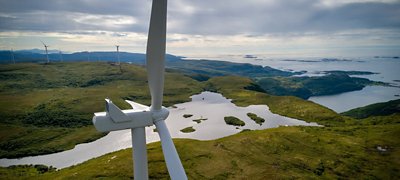
Promoting Environmental Sustainability
Our environmental impact and ambitions
At Vestas, our purpose is to help drive the energy transition through sustainable energy solutions. By generating electricity without fossil fuels, wind energy plays a critical role in reducing greenhouse gas emissions and mitigating climate change.
By producing electricity from wind, our turbines help avoid the emissions that would otherwise be generated from fossil fuel-based power sources. Our turbines produced in 2025 alone are expected to avoid 463 million tonnes of greenhouse gas emissions over their lifetime.
While the positive impact of our products is significant, we recognise our responsibility to reduce the environmental footprint of our own business and value chain.
In line with our sustainability strategy, we are pursuing science-based decarbonisation across our operations and supply chain without the use of carbon offsets, while working towards producing zero-waste wind turbines by 2040.
Read more at the links below.
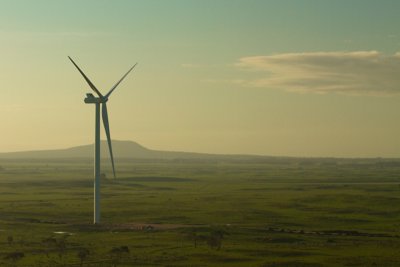
Mitigating and adapting to climate change
More than 60 percent of all greenhouse gases currently emitted are linked to the energy sector (UN 2020), making it the single most important sector to focus on to combat climate change. Currently, only around 28 percent of the world’s electricity generation is derived from renewable sources (IEA 2020).
To limit global warming to 1.5°C above pre-industrial levels, the share of renewables in the energy mix must increase to 70-85 percent by 2050 (IPCC 2018). A rapid transformation away from fossil energy sources to renewables such as wind is pivotal if we are to meet the ambitions of the Paris Agreement.
At the very core of our company, we work to solve this challenge by producing, installing, and servicing wind turbines of unparalleled quality.
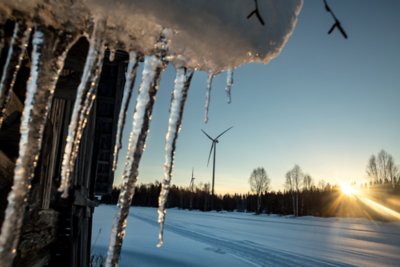
Our solutions are key to enabling a sustainable energy transition and mitigating the worst future climate scenarios. Given the inevitability of climate change, we have always developed our products to withstand and produce energy under extreme weather conditions.
We have also implemented climate risk and scenario analysis as an integrated part of our approach to understand the inherent risk profile of our business activities, identify vulnerabilities and inform strategic decision making around resilience building.
The methodological foundation of our approach, the scope and the results are available in the Sustainability Statement of our Annual Report.

?qlt=85&ts=1639752152963&dpr=off)